
By:Betty Luke
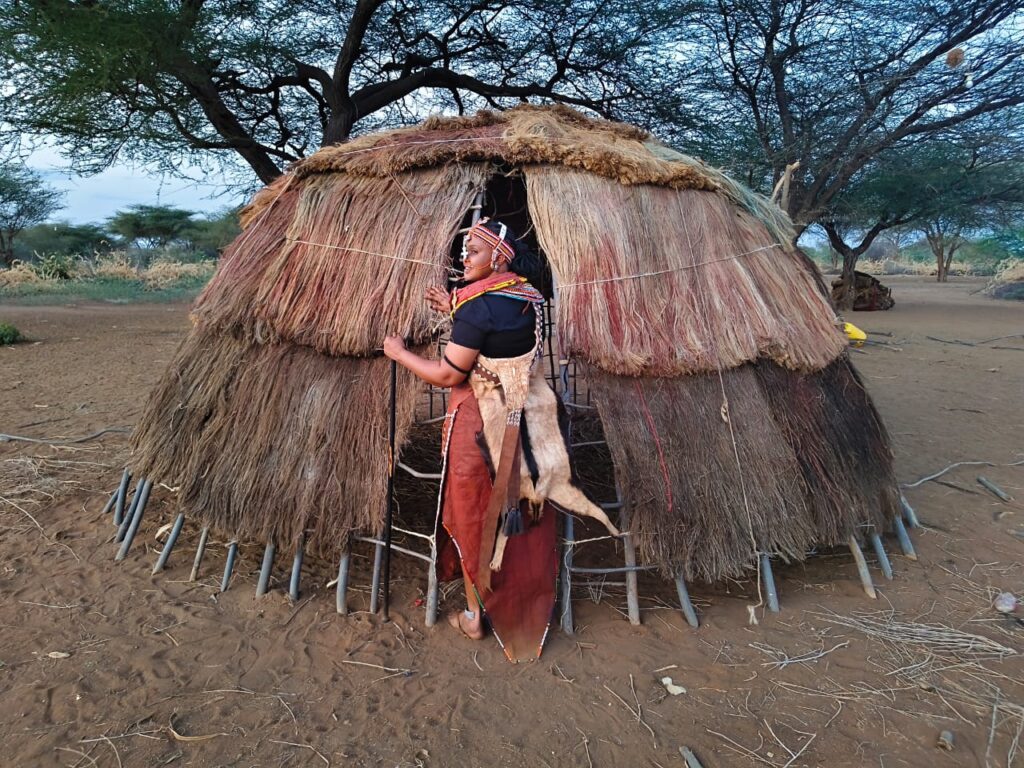
A Rendille Woman infront of a traditional hut at the community’s cultural center in Loglogo, Marsabit County. PHOTO/Kilele Media Production
For generations, the Cushitic-speaking Rendille community has safeguarded its language, songs, traditional foods and customs, passing them from one generation to the next.
Today, however, elders worry that the rich cultural heritage is steadily fading as younger people increasingly adopt dominant languages, lifestyles and traditions, raising fears that some aspects of Rendille identity could be lost if deliberate preservation efforts are not sustained.
That concern is driving renewed efforts to preserve not only the community’s identity but also the indigenous knowledge that has sustained pastoralist communities for centuries.
This year’s second annual Rendille Food and Cultural Festival, that will be held in August in Marsabit’s Loglogo ward, has become one of the platforms advancing that mission.
Under the theme Celebrating Our Heritage: Food, Culture and the Future of Pastoralism, the festival coincides with the International Year of Rangelands and Pastoralists and World Indigenous Peoples’ Day, placing local conversations within a global campaign to protect indigenous cultures and rangelands.
According to the conveners, the gathering seeks to create a space for communities to discuss the realities they face including climate change, shrinking grazing lands, land governance, youth unemployment, women’s empowerment and peaceful coexistence.
Pastoralists People’s Initiative (PPI) Executive Director Margret Super said more than 3,000 participants including delegates from Uganda and Tanzania and representatives from Kenya’s 14 Arid and Semi-Arid Land (ASAL) counties were expected to attend.
“The festival provides an opportunity for pastoralist communities to celebrate their heritage while sharing practical solutions to the challenges affecting their livelihoods,” said Super.
Activities begin on August 5 with a mass livestock vaccination campaign targeting more than 10,000 animals in partnership with the National and County governments.
The programme will also include the launch of the Marsabit Camel Peace Trek aimed at promoting peaceful coexistence among communities before, during and after the 2027 General Election.
“Every electioneering period Marsabit experience clashes and so we thought a trek would sensitize our communities that regardless of our political affiliations we need each other as neighbors, friends, sisters and brothers,” added Ms Super.
Dialogue sessions will bring together elders, youth, women, government officials and development partners to exchange ideas on climate adaptation, land issues, youth entrepreneurship and women’s economic empowerment.
The festival will also showcase traditional Rendille food, indigenous medicine, clothing and artefacts, highlighting the knowledge that has enabled pastoralist communities to survive and adapt in arid environments for generations.
The celebrations will culminate in a camel derby and a peace and cohesion dialogue, reinforcing the message that culture, peace and sustainable livelihoods are closely linked in shaping the future of pastoralist communities.